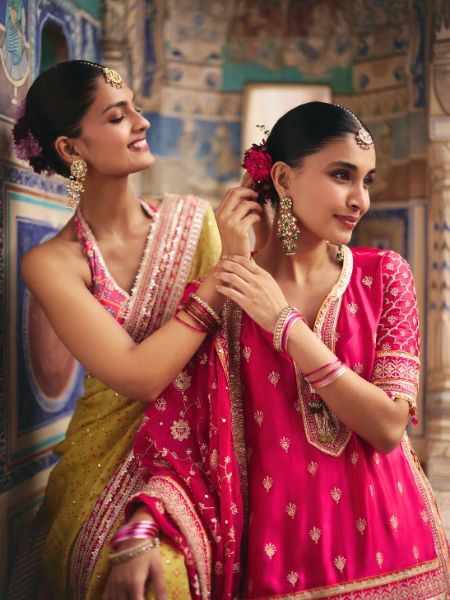
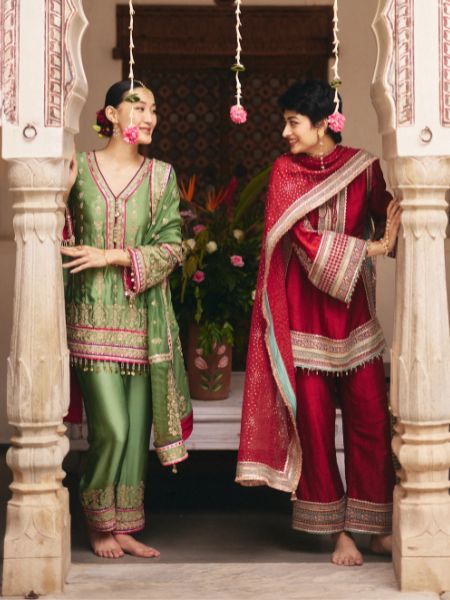
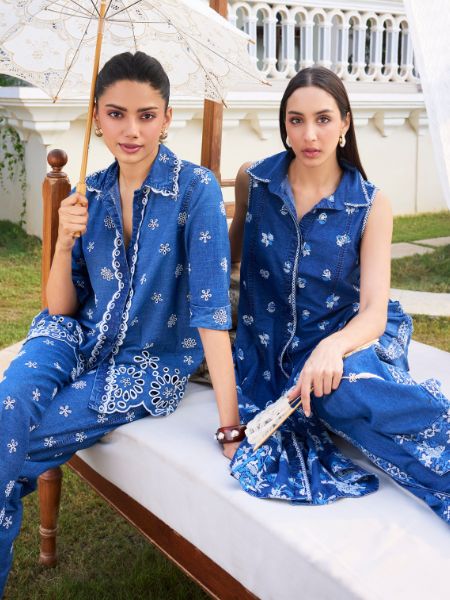
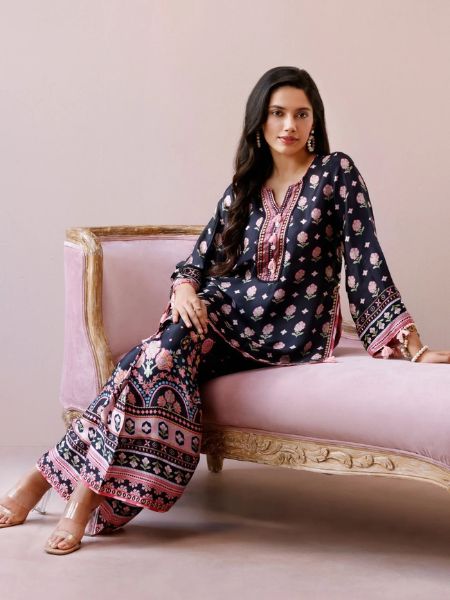

We've all been there: you spot a kurta on a model, fall instantly in love, place the order - and then wonder why it doesn't quite fall the same way when it arrives. The answer isn't your body; it's the cut. Certain silhouettes naturally complement certain proportions, and knowing which ones work for you can make getting dressed feel considerably more effortless.
Before your next kurta purchase, consider this your guide to finding the shapes that complement your frame, rather than compete with it.
Pear Shaped? Let the A-Line Take the Lead
If your hips are slightly fuller than your shoulders, you're working with a pear-shaped frame. The silhouette to know? The A-line. Its gentle flare skims over the hips, creating a clean, balanced line without adding unnecessary volume.
Anarkalis make an equally compelling choice. A more defined bodice draws the eye upwards, while the fluid fall through the skirt creates a beautifully proportioned silhouette.
As for what to leave behind, body-hugging kurtas can sometimes feel a little too restrictive around the hips. Instead, look for cuts that follow your natural shape with a little room to move—because the best silhouettes don't disguise your proportions, they work with them.
Try this: The Saia Denim Kurta with Farshi Salwar does exactly this- a relaxed, fitted denim kurta on top with a voluminous red farshi salwar below that skims right past the hips.

Apple Shaped? Empire Waists Are Doing You a Favour
Carrying a little more around the middle or bust? An empire waist kurta, one that cinches just under the bust and flows loose from there, is going to be your go-to. It skips the midsection entirely and lets the fabric do a soft, graceful drop instead.
Straight-cut kurtas in lightweight fabrics also work well, especially ones that don't nip in tightly at the waist. If you love definition, a soft dupatta draped diagonally across the body adds shape without a single dart or seam doing the heavy lifting.
Try this: The Avika Supima Cotton Off-White Kurta Set is a long, straight kurta that falls cleanly without cinching anywhere, exactly the kind of easy structure this body type loves.

Hourglass Shaped? Show Off That Waist
Lucky you, if your shoulders and hips are roughly balanced with a defined waist in between, most silhouettes will work, but the ones that really shine are the ones that follow your natural shape. Think fitted or semi-fitted straight kurtas, wrap-style kurtas, or Anarkalis with a snug yoke that flares out below the waist.
The goal here isn't to hide anything- it's to let the kurta trace the shape you already have. A well-placed waist tie or belt can turn a simple kurta into your whole personality for the day.
Try this: The Zani Cupro Satin Lime Kurta with Draped Pants keeps the kurta short enough to show off the waist, while the draped pants follows your body's natural line instead of hiding it.

Rectangle Shaped? Bring In Some Movement
If your shoulders, waist, and hips are all in similar proportions (lucky in a different way- hello, easy shopping!), the fun part is playing with volume to create curves where you want them. Peplum kurtas, tiered hemlines, and flared silhouettes with a cinched waist all add dimension without overwhelming your frame.
Look out for kurtas with gathers at the waist or a flowy bottom half, they add just enough movement to keep things interesting.
Try this: The Solene Cupro Satin Lime Co-ord Set pairs a relaxed embroidered shirt with balloon pants that gather at the waist and ankle bringing instant volume, minus any bulk.

Petite? Let the Kurta Work With You, Not Around You
Not a body "type" exactly, but petite frames deserve a quick shoutout. Shorter kurta lengths (think knee-length or just above) tend to elongate rather than shorten your frame, and vertical prints or panel detailing do wonders for creating the illusion of height. Skip anything too voluminous, an oversized flare can end up wearing you instead of the other way around.
Try this: The Amora Supima Cotton Off-White Co-ord Set keeps things short up top and pairs it with tapered pants- a proportion that elongates rather than overwhelms.

A Few Questions People Usually Ask

How do I find out my body type? The simplest way is to measure your shoulders, bust, waist, and hips, then compare how they relate to each other. Wider hips than shoulders usually means pear; a fuller midsection with narrower hips points to apple; similar shoulder and hip measurements with a defined waist means hourglass; and minimal difference between all three usually means rectangle. A measuring tape and a mirror will tell you more than any online quiz.
Can my body type change over time? Yes, absolutely! Weight changes, age, pregnancy, and even fitness routines can shift your proportions over the years. It's worth re-checking your measurements every so often rather than assuming the shape you were at 20 is the shape you are now.
Does body type dressing apply to all outfits, or just kurtas? The same logic carries over to sarees, dresses, co-ords, and Western wear too. It's really about proportion and balance, not the garment itself. Once you know what silhouette works for you, you'll start noticing it applies far beyond just kurtas.
What if I don't fit neatly into one category? Most people don't, and that's completely normal, bodies are rarely textbook shapes. Treat these categories as a starting point for what might work, not a strict box you need to fit into.
The Real Rule? Wear What Makes You Feel Like You
Silhouettes are a starting point, not a rulebook. The best kurta is still the one that makes you want to twirl in front of the mirror a few extra times before you walk out the door. Use these as a guide, not a boundary and if a cut breaks every "rule" on this list but makes you feel unstoppable, that's the one.
Ready to find your fit? Browse Mulmul's kurta sets and let your silhouette pick you for once.